
Emergency Beacons for Divers Explained
PLBs, satellite communicators, and AIS devices
When you're adrift in open water, a beacon is the difference between a search-and-rescue operation and a recovery. This guide explains every beacon type available to divers and helps you choose the right one.
Why Surface Signalling Matters
Dive incidents that result in fatalities often involve a diver reaching the surface safely but being unable to signal their position to the boat. Current-driven drifts, sudden weather changes, and boat traffic are consistent contributing factors. The Divers Alert Network (DAN) reports that surface drifting and loss of contact with the dive boat are among the most common scenarios preceding diver fatalities in open water.
DSMBs and whistles are essential first-line tools, but electronic beacons add a dimension of certainty that passive visual and audible signals cannot: they tell search-and-rescue services exactly where you are, automatically, even if you are incapacitated.
Key statistic
Studies of maritime search-and-rescue operations consistently show that beacon-equipped casualties are located significantly faster than those without, often within minutes rather than hours. Time to rescue is the single most important variable in survival outcomes.
Real-World Diving Scenarios
These are the situations where electronic beacons change outcomes.
Adrift at the surface
A current carries you away from the boat after surfacing. Your DSMB is up but the boat has moved and can't see you. A PLB triggers an SAR response with your GPS coordinates: the boat crew doesn't need to find you by sight.
Separated from the group
You surface in unfamiliar water with no boat in sight. Your visual signals are ineffective beyond a few hundred metres. An AIS device alerts nearby vessels instantly; a PLB contacts coastguard satellite infrastructure.
Reduced visibility conditions
Fog, sea spray, or darkness makes it impossible for anyone to see you at distance. Electronic beacons don't depend on visibility: they broadcast your location regardless of conditions.
Unresponsive diver
A buddy is injured or incapacitated at the surface. You need rescue fast. Activating a PLB starts an SAR response while you focus on keeping the casualty safe, no phone signal required.
Are Emergency Beacons Worth It?
Most divers will never activate a beacon in an emergency, but the situations where beacons matter tend to be the same situations where passive signals fail. Drift dives, remote locations, night dives, and solo diving all significantly increase the likelihood of needing electronic backup.
A PLB costs less than one session of hyperbaric treatment. It requires no subscription, lasts 7+ years, and covers you in every maritime environment on Earth. For travelling divers, liveaboard divers, and anyone diving away from busy coastal waters, the argument against carrying one is hard to make.
The layered approach
The most resilient setup uses multiple layers: DSMB and whistle for normal surface situations, strobe for low-light, PLB for genuine emergencies. Each layer covers the failure modes of the previous one.
Personal Locator Beacons (PLBs)
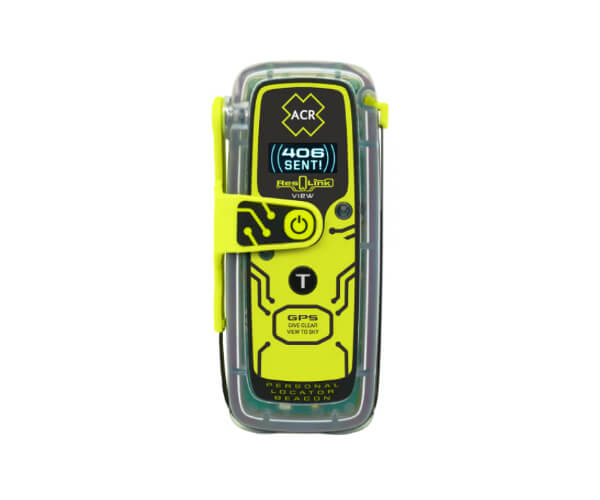
A Personal Locator Beacon (PLB) is a battery-powered transmitter that, when manually activated, sends a distress signal via satellite to the international Cospas-Sarsat search-and-rescue system. This network of low-Earth-orbit and geostationary satellites is monitored by Local User Terminals worldwide, which relay alerts to the appropriate national Maritime Rescue Coordination Centre (MRCC).
How a PLB alert reaches rescuers
- 1
You activate the PLB manually (flip a switch or pull a pin). It transmits on 406 MHz.
- 2
Cospas-Sarsat satellites receive the signal. The built-in GPS module (on modern PLBs) transmits your exact coordinates alongside your registered beacon ID.
- 3
The MRCC receives the alert with your GPS position and your registration details (name, contact, description of vessel or activity).
- 4
A rescue asset is dispatched. The PLB also transmits on 121.5 MHz, a homing frequency search aircraft use to zero in on your position.
PLB registration
Every PLB must be registered with your national authority. In the UK, register free at the Maritime and Coastguard Agency. In the US, register with NOAA's beacon registry. Registration links your beacon's unique 15-digit Hex ID to your personal details, dramatically reducing search time.
Recommended PLBs for divers
- ACR ResQLink 400: compact (11cm), GPS-enabled, waterproof to 15m, 24hr battery, ~£220
- Ocean Signal rescueME PLB1: world's smallest PLB, 5-year battery, ~£200
- McMurdo FastFind 220: auto-deploy float version available, popular with liveaboard divers
Satellite Communicators
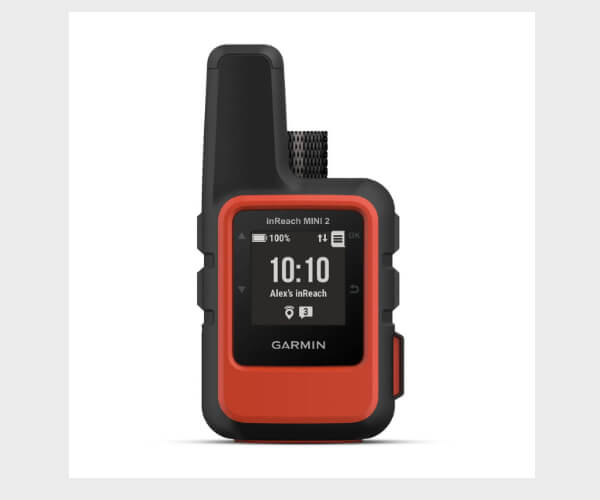
Satellite communicators go further than PLBs: they provide two-way communication via satellite, allowing you to send GPS location updates, receive messages, and coordinate a response, rather than simply triggering a one-way emergency alert.
The leading devices, including the Garmin inReach Mini 2 and SPOT X, use the Iridium satellite constellation, which provides true global coverage (including polar regions where GPS-only devices may fail). A subscription is required: basic tracking plans start around £12/month; unlimited messaging plans run £30-£50/month.
Benefits for divers
- ✓Send your GPS coordinates to your shore contact or dive operator in real time
- ✓Two-way messaging: receive updates from the rescue team during an incident
- ✓Pre-set check-in alerts so contacts know you're safe without manual messaging
- ✓SOS function connects to GEOS International Emergency Response, a 24/7 rescue coordination centre
- ✓Useful beyond diving: hiking, sailing, expedition travel
AIS Rescue Devices
Automatic Identification System (AIS) is a maritime tracking technology used by vessels to broadcast their identity, position, and speed. AIS receivers are fitted on most vessels over 300 gross tonnes as mandated by IMO regulations. AIS-equipped dive safety devices transmit a distress signal on the AIS network, making you immediately visible on the chart plotters and AIS receivers of any nearby vessel, often within seconds of activation.
AIS rescue devices are particularly useful for boat divers in busy shipping lanes and coastal waters where commercial traffic is common. They don't require satellite relay: the signal goes directly to any vessel within 3-5 nautical miles. This means a faster initial response in busy waters, though they offer no coverage in remote locations without vessel traffic.
AIS limitation
AIS is a vessel-to-vessel system. It has no satellite relay component: if there are no ships within range, your signal won't be received. For remote diving, a PLB or satellite communicator remains essential. AIS rescue devices work best as a complement to, not a replacement for, PLBs.
Comparison: Which Beacon is Right for You?
| Feature | PLB | Satellite Communicator | AIS Rescue Device |
|---|---|---|---|
| Global coverage | ✓ | ✓ | ✗ |
| Two-way comms | ✗ | ✓ | ✗ |
| Subscription required | No | Yes (~£12-50/mo) | No |
| Typical cost | £180-260 | £280-450 | £120-200 |
| Response time | Minutes (satellite) | Minutes (satellite) | Seconds (nearby vessels) |
| Works if incapacitated | ✓ (once activated) | Partial | ✓ (once activated) |
Recommendations by Diving Type
Recreational reef / boat diving
DSMB + whistle + PLB. The PLB can be rented from some dive operators or purchased outright: at £200, it's lifetime safety equipment.
Liveaboard / remote expeditions
DSMB + PLB + satellite communicator. The sat-comm allows proactive coordination with the vessel, not just emergency alerting.
Shore diving in coastal waters
DSMB + PLB + AIS device. The AIS will alert nearby vessels immediately; the PLB covers you if no vessels are within range.
Technical / deep diving
Full kit: DSMB + PLB + satellite communicator. Technical incidents are statistically more likely to result in extended surface times. Two-way communication with the support team is a safety essential.
Frequently Asked Questions
Can I take a PLB underwater?
Most PLBs are rated to 10-15m depth, so they'll survive a brief submersion, but they are designed for surface use. Do not activate a PLB underwater: the signal is blocked by water. A PLB should be worn clipped to your BCD and deployed at the surface.
Do I need a subscription for a PLB?
No. PLBs require one-time registration with your national authority (free) but no ongoing subscription. The Cospas-Sarsat network is a government-funded international system. This is a key advantage over satellite communicators.
What happens if I accidentally activate my PLB?
Cancel the alert immediately by turning it off and contacting the MRCC for your region (in the UK: call Falmouth Coastguard on +44 1326 317575; in the US: call the Coast Guard on 1-888-990-2477). False activations waste significant rescue resources. If you're unsure whether to activate, activate. If it was accidental, cancel promptly.
Is a satellite communicator worth the subscription cost?
For most recreational divers, a PLB provides equivalent emergency coverage at zero ongoing cost. A satellite communicator adds value if you dive frequently in remote locations, run liveaboard trips, or want the ability to coordinate non-emergency situations (e.g., missed boat pick-up) without triggering a full SAR operation.
After You're Found
A beacon gets rescuers to your location. That's its job, and it does it well. But once you've been recovered, first responders still need to know who you are, your blood type, your allergies, your medications, and who to contact.
A locked phone, a missing wallet, and a language barrier all create information gaps at exactly the moment when information is most needed. Many divers complement their beacon setup with a scannable emergency identification system, so that the moment they're found, the people who find them know how to help.
When rescuers reach you, make sure they know who you are
A beacon gets rescuers to your location. A ScubaID emergency profile tells them your blood type, allergies, medications, and who to call: the information that shapes their immediate treatment decisions. It's free to create and takes 10 minutes.
Create your free ScubaID →